UNIT 92
RESIDENTIAL
Located in the heart of Valencia, this PassiveHaus apartment emerges from a reflection on contemporary ways of inhabiting space: more open, flexible and silent environments, where architecture not only organizes function, but also shapes everyday experience.
The intervention completely transforms a formerly fragmented apartment lacking spatial hierarchy. The original compartmentalized layout, dominated by a long corridor, disappears in favor of a much clearer and fluid organization articulated through a single precise architectural gesture.
Access occurs through the center of the apartment, operating as a threshold that naturally divides the project into two distinct atmospheres: on one side, the day area, open and connected to light; on the other, the night area, more intimate and contained. This arrangement allows the apartment to be understood almost as two different worlds connected by a continuous organizing element.
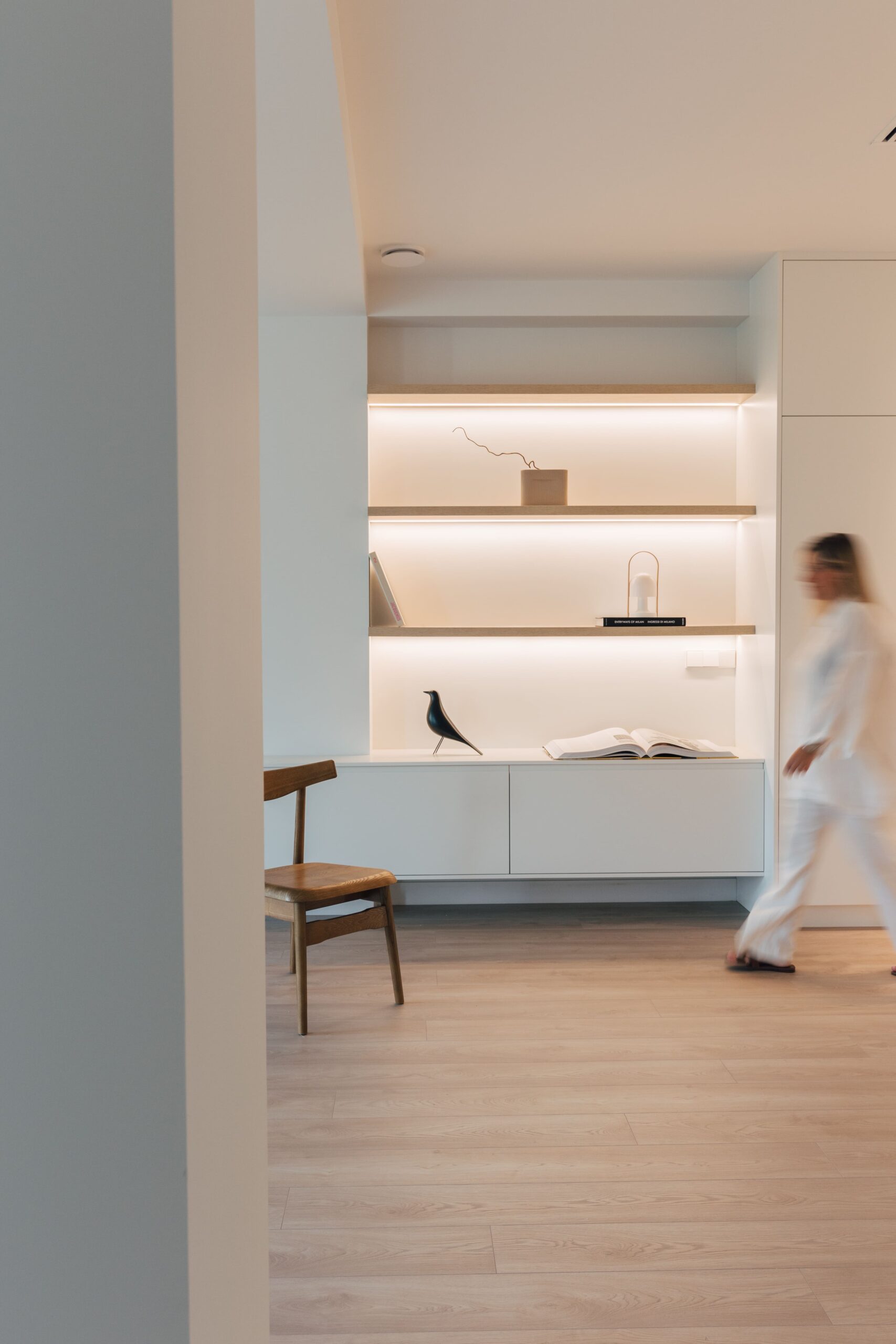
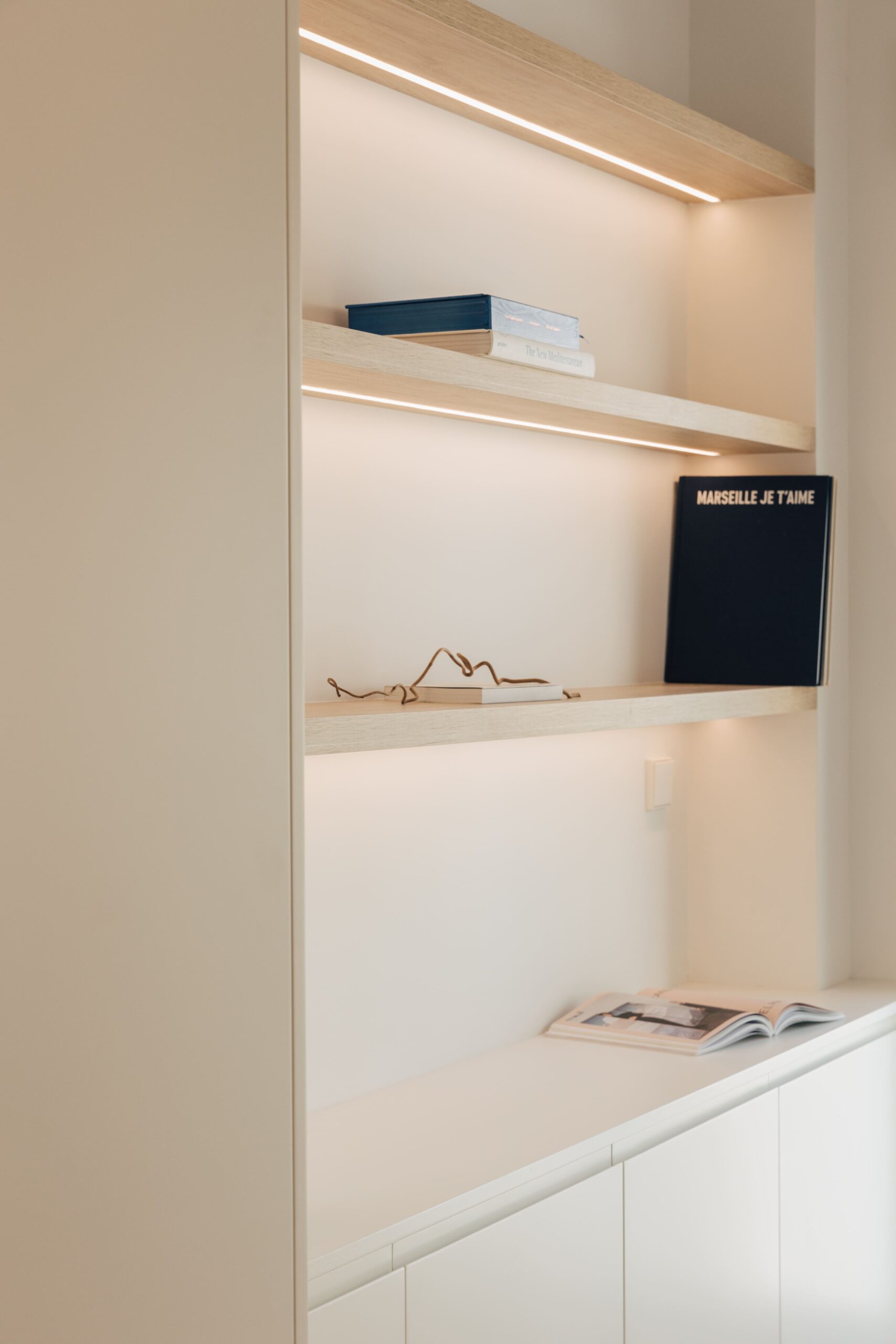
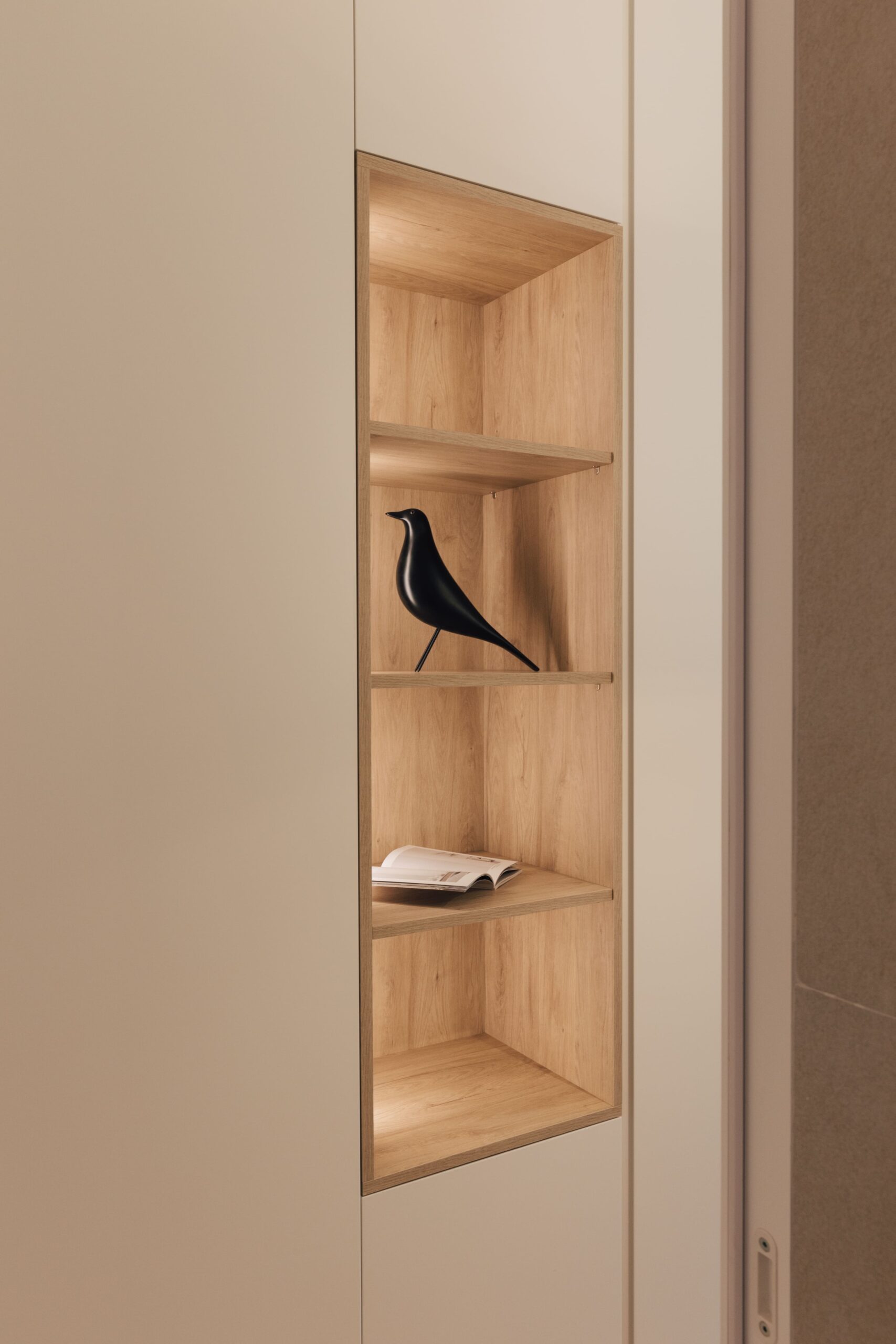
This longitudinal perimeter axis runs throughout the project, integrating storage, technical installations, lighting and concealed joinery. More than a simple piece of furniture, it acts as a domestic infrastructure capable of organizing the entire space while eliminating the traditional corridor, transforming circulation into an active part of the architectural experience.
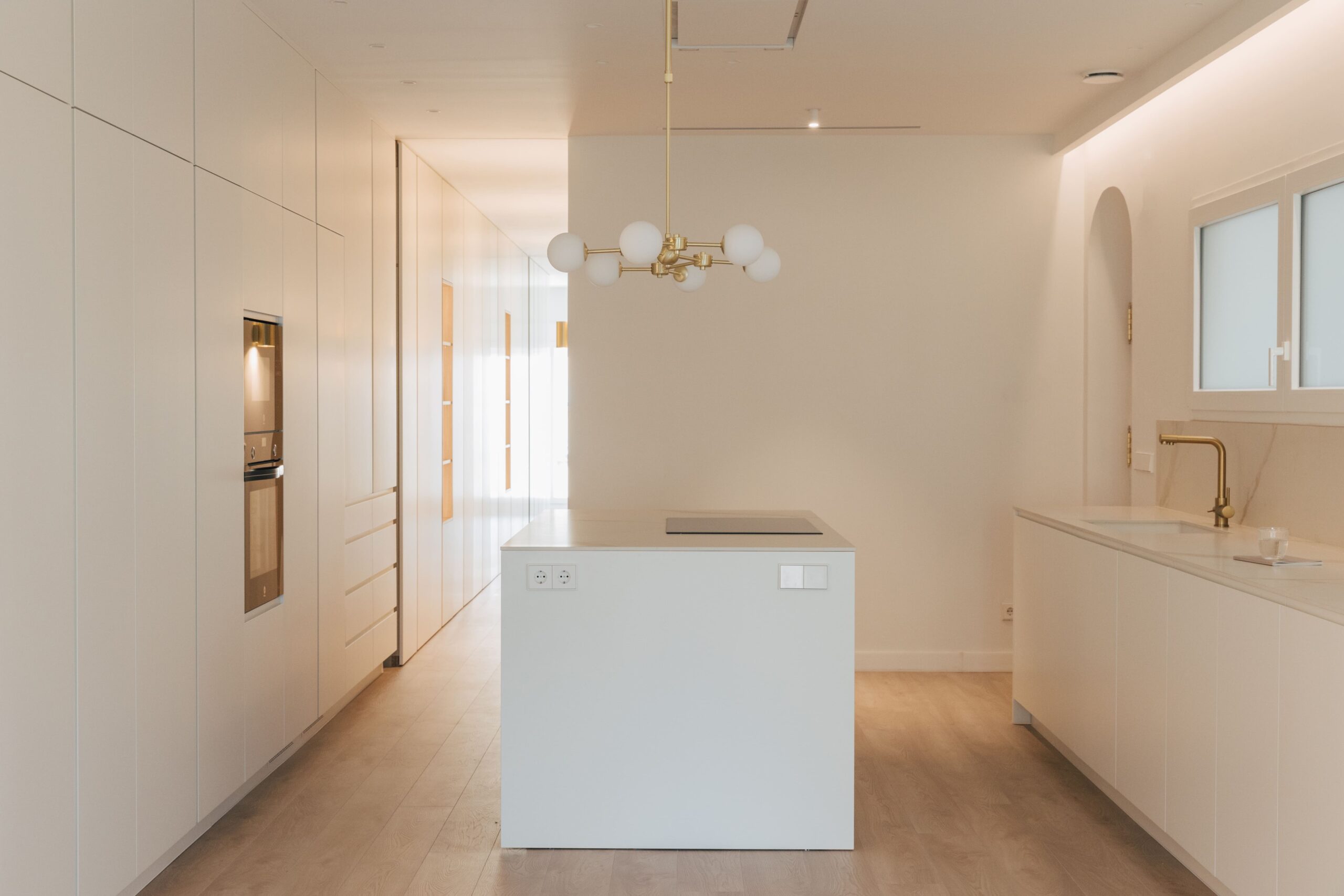
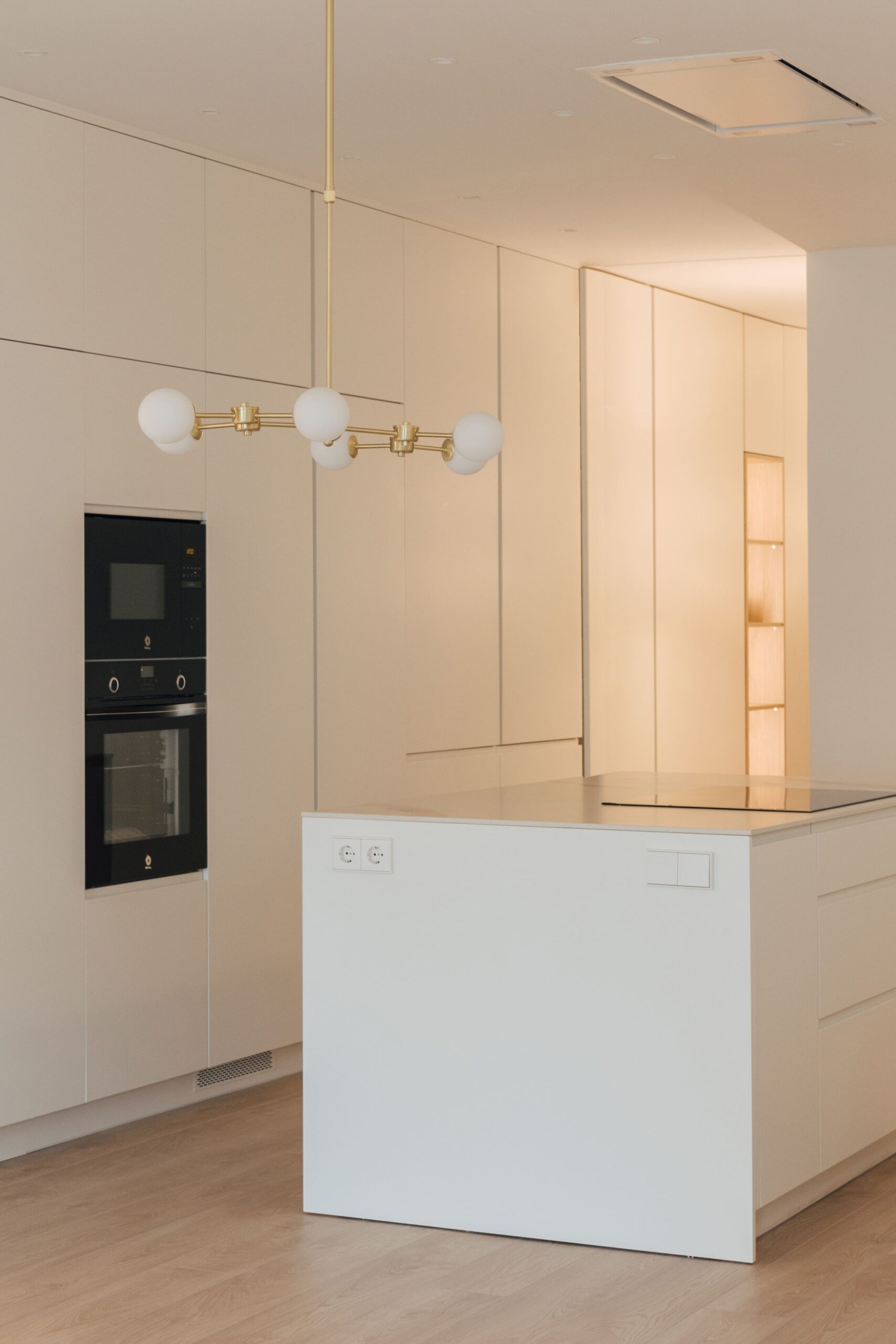
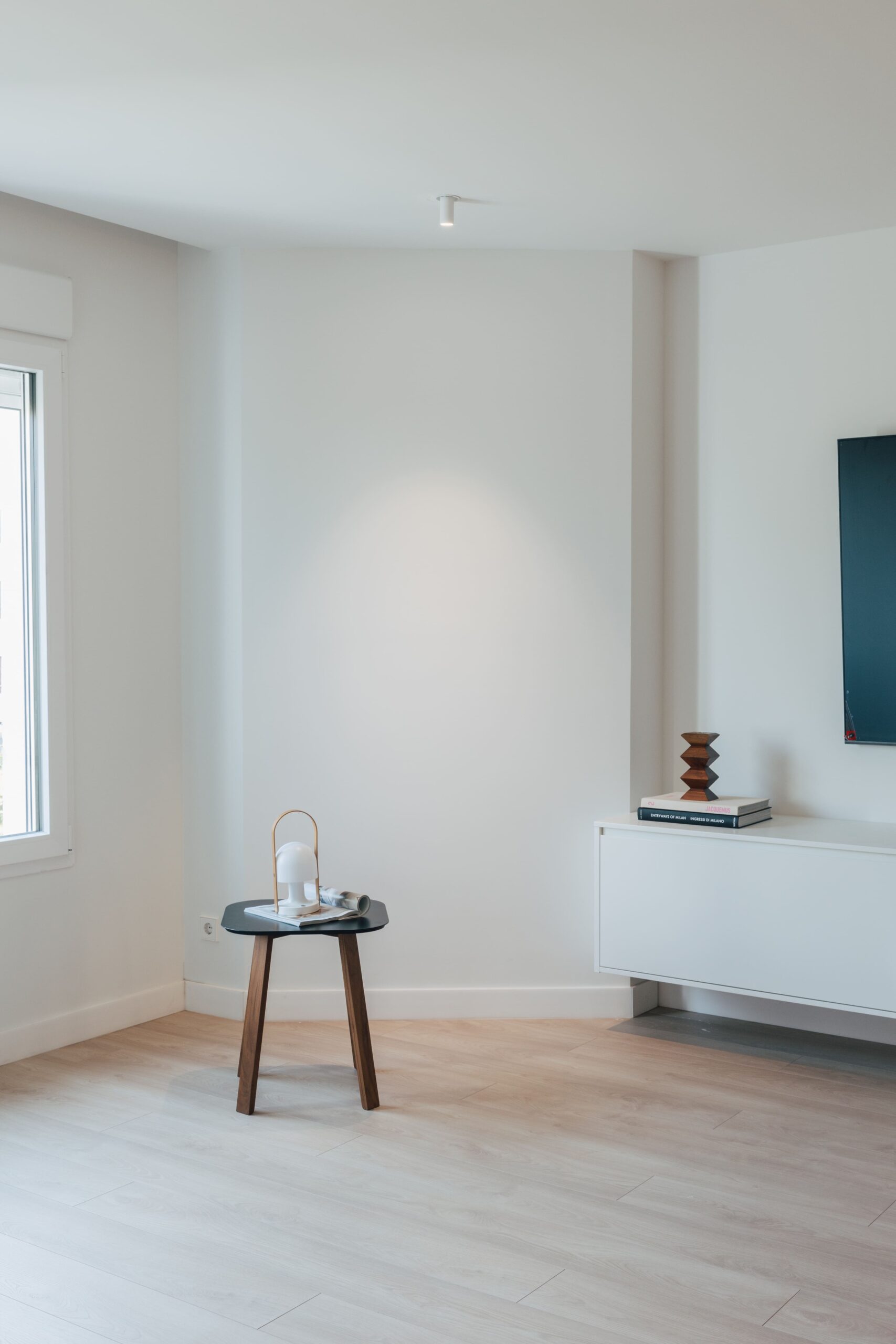
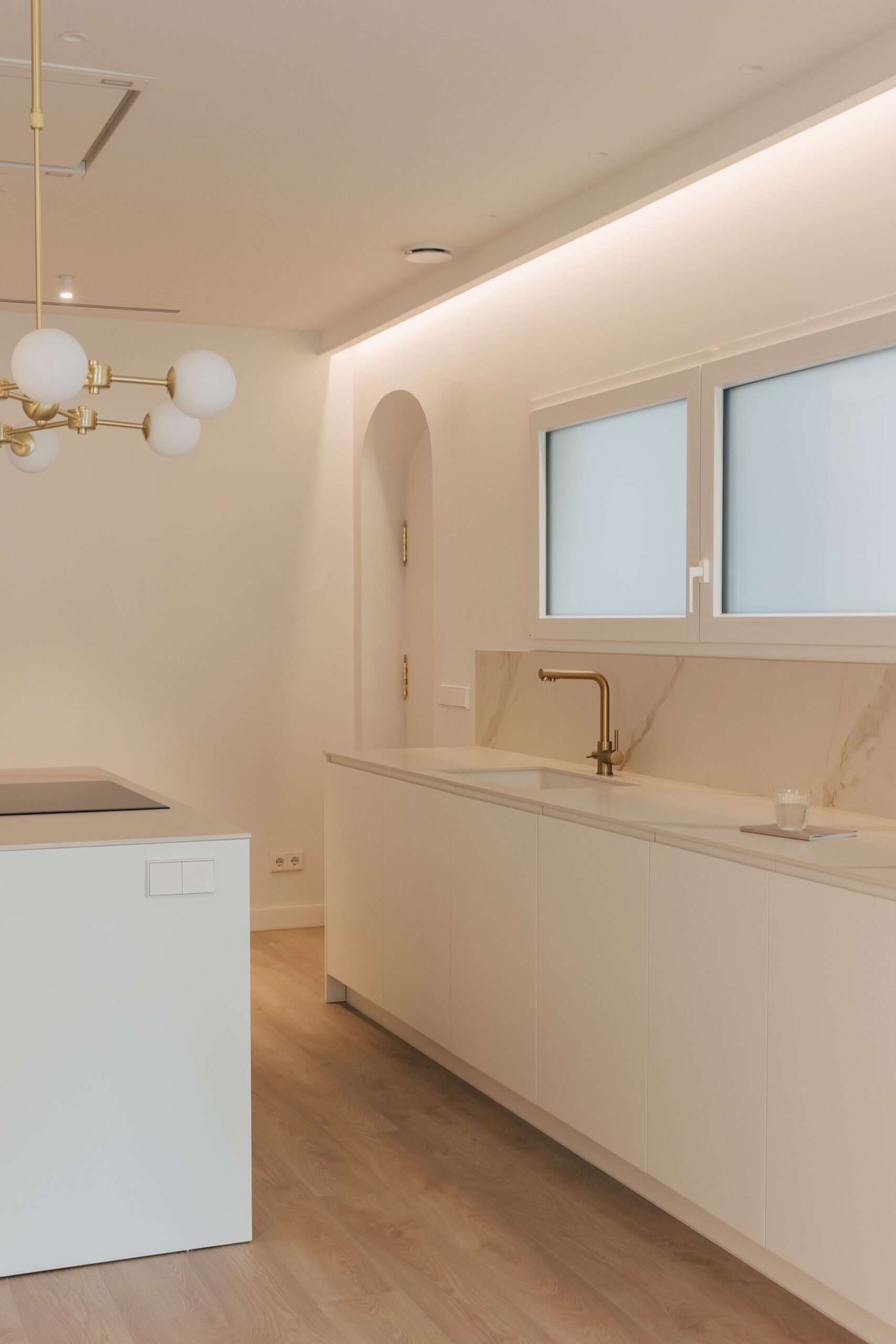
The day area is conceived as a single continuous space where the living room, dining area and kitchen coexist without rigid boundaries. Material continuity, neutral tones and indirect lighting enhance a calm and serene atmosphere, where light softly reflects across white surfaces, amplifying the perception of spaciousness.
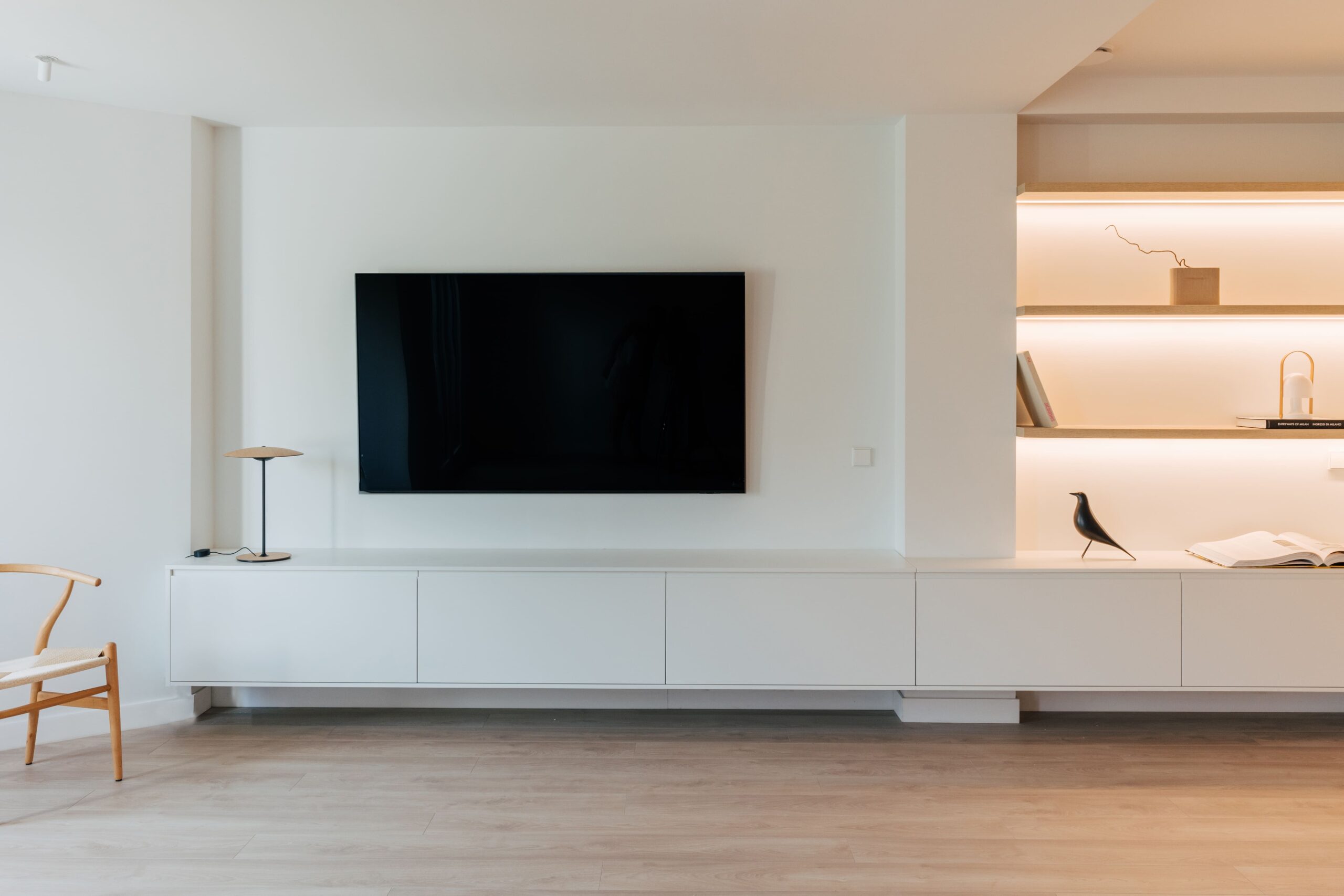
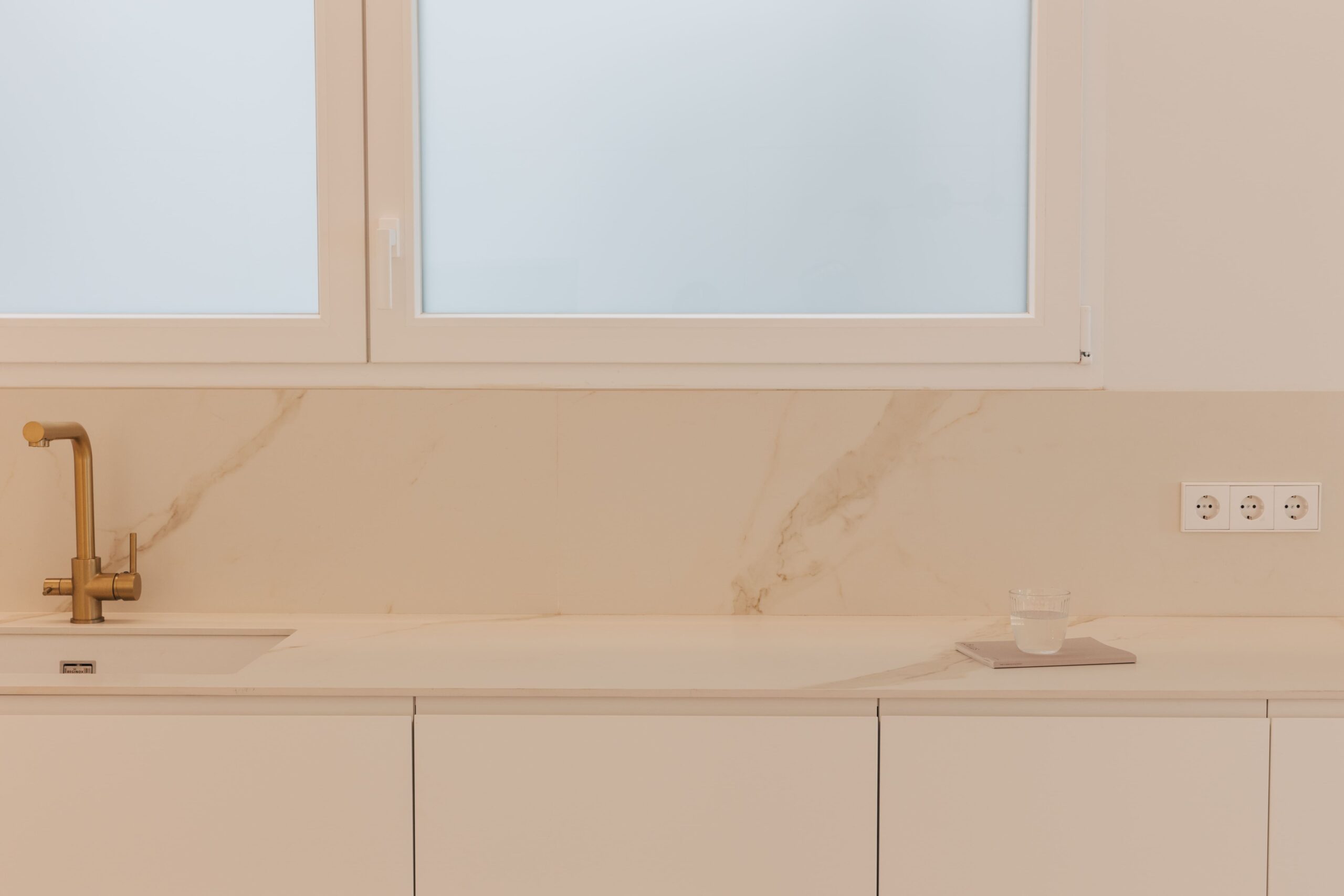
The kitchen is naturally integrated into this common area, understood more as a piece of furniture than as an independent room. Large continuous storage fronts reinforce the clean and abstract reading of the project, concealing functional complexity behind a deliberately essential aesthetic.
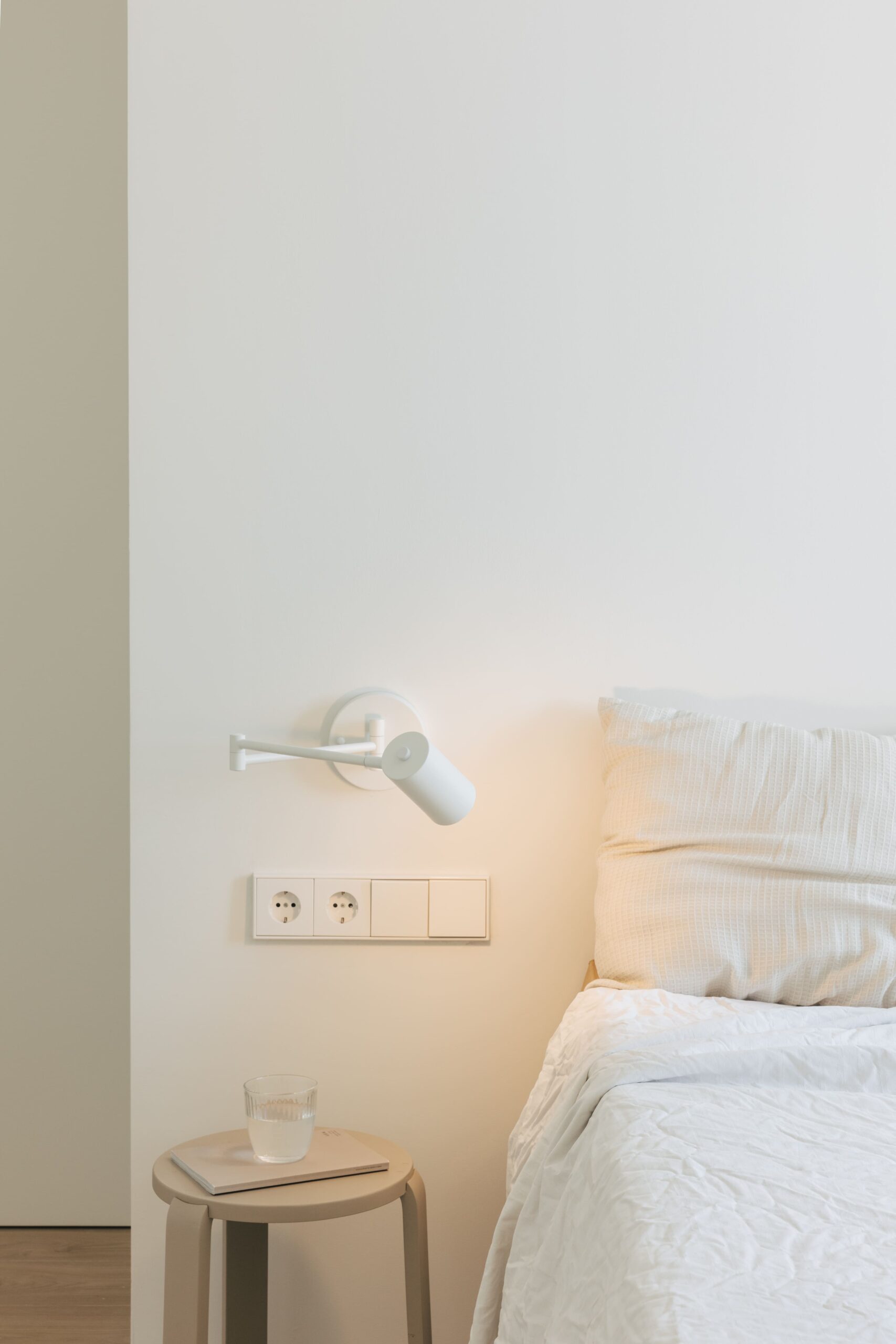
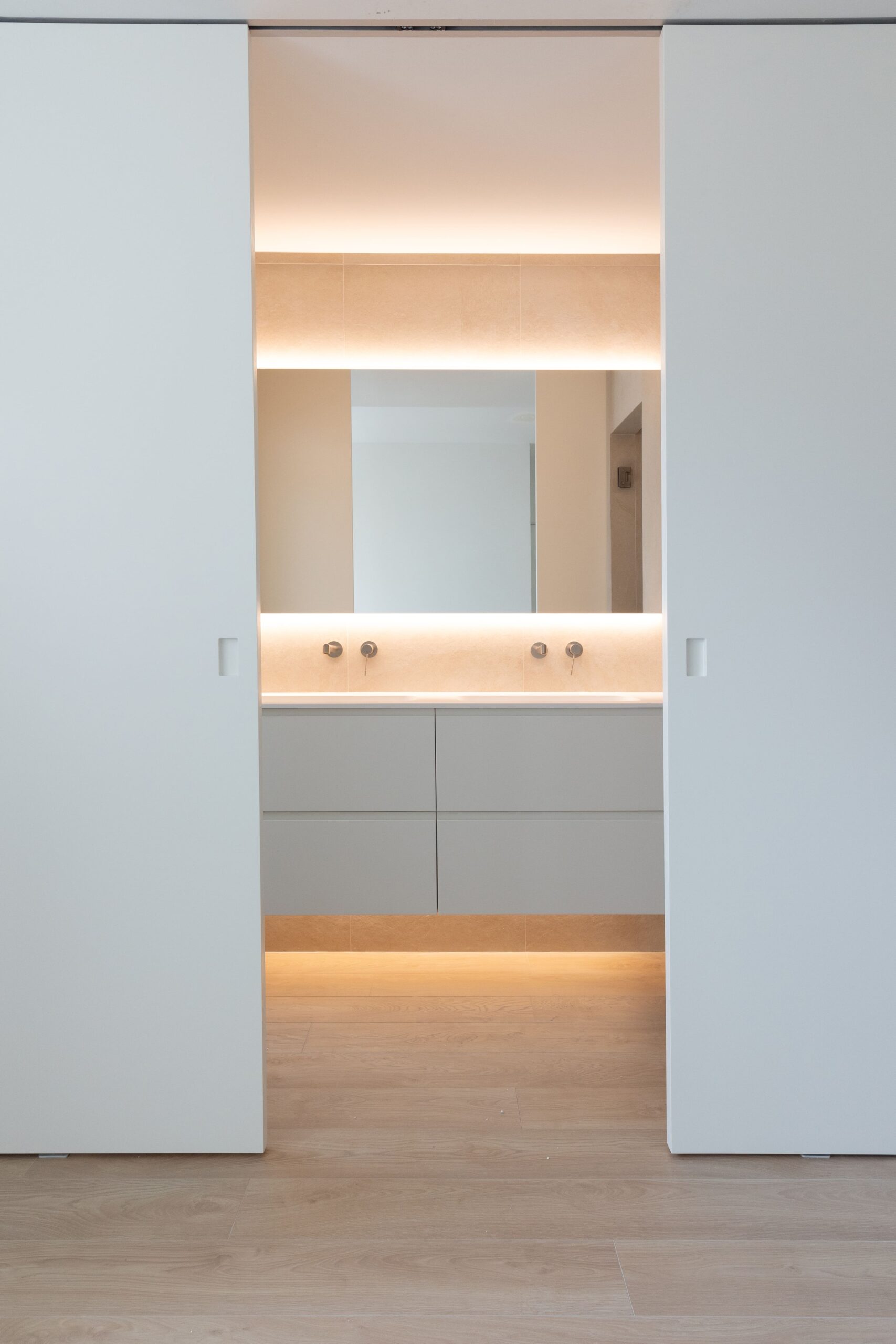
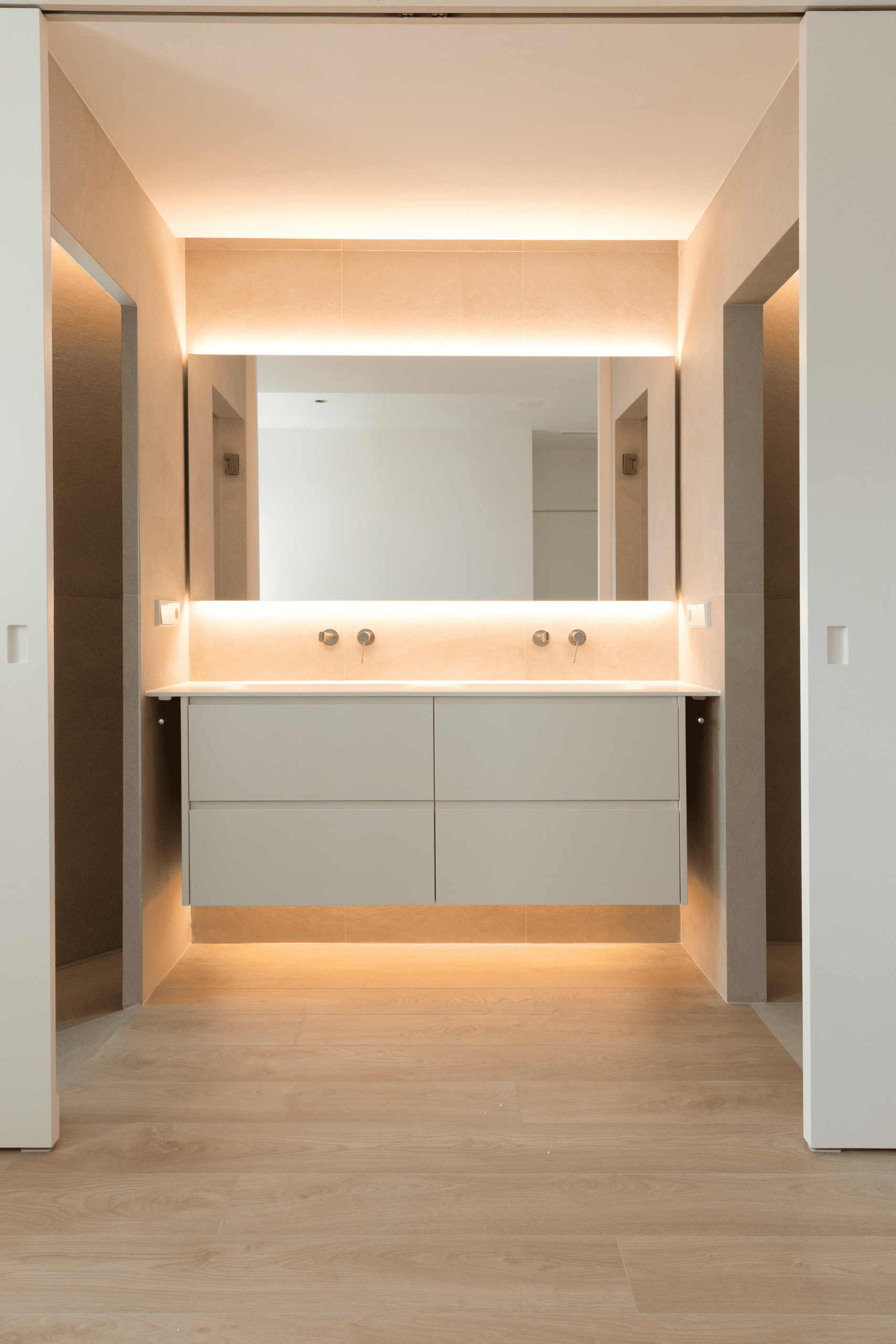
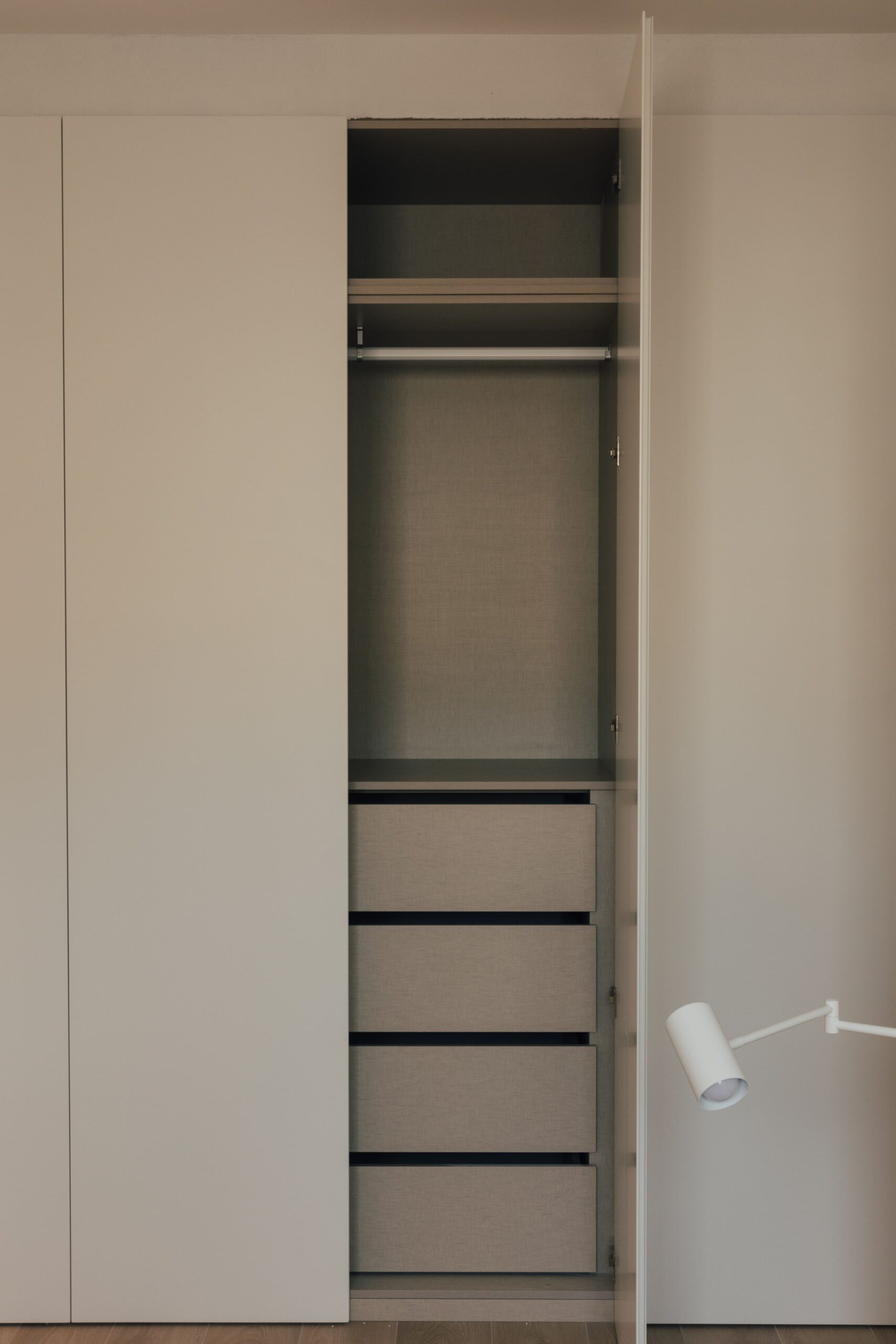
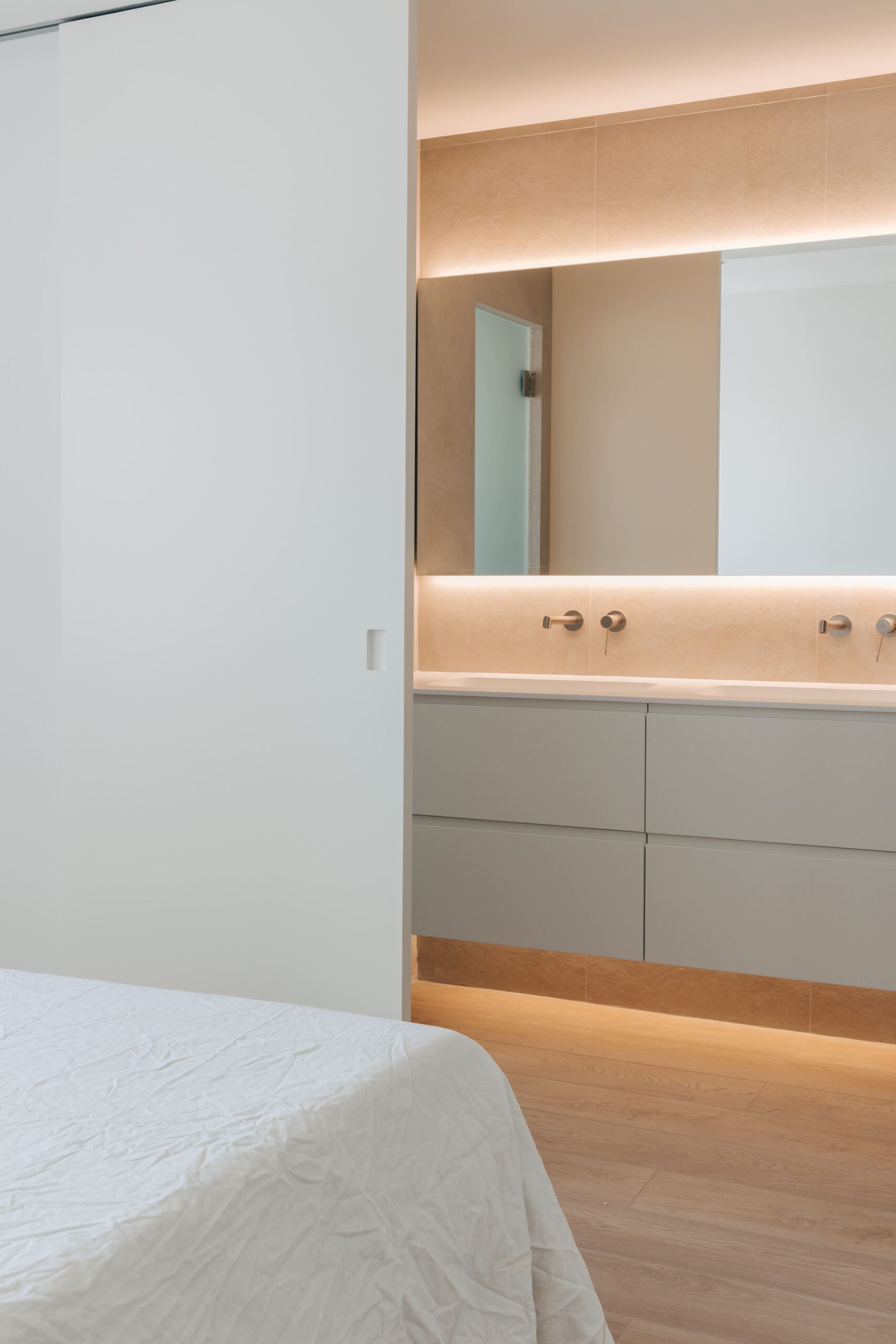
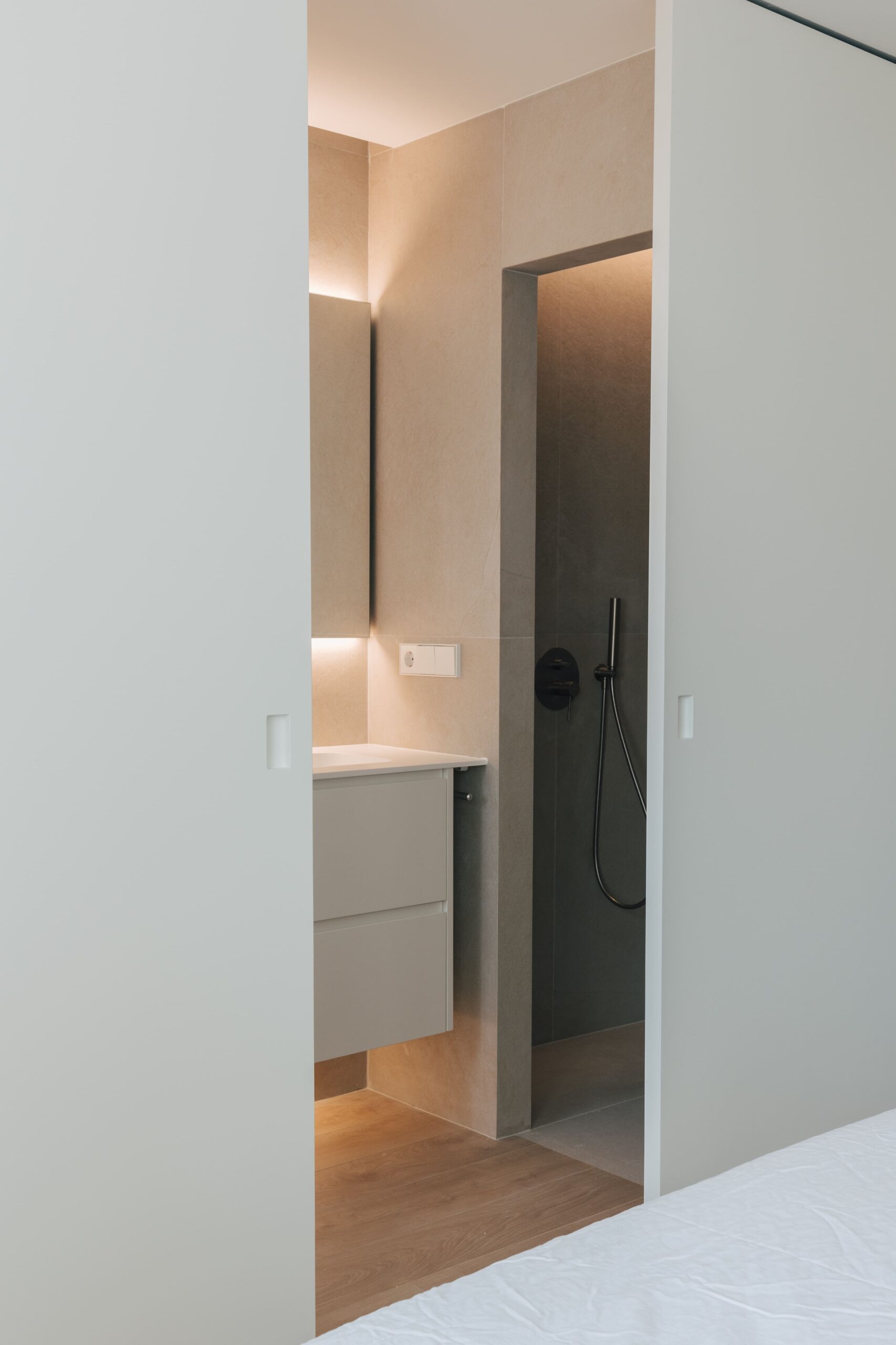
In contrast, the night area is conceived through a more introspective approach. The master suite incorporates the bathroom as an extension of the bedroom, evoking the relaxed and sophisticated atmosphere of a hotel suite. Flush doors, concealed elements and the continuity of finishes contribute to a refined and silent perception of space.
However, the true singularity of the project lies in an almost invisible condition: the transformation of the apartment into a Passive House. The passive strategy is understood not only in terms of energy efficiency, but as a tool capable of radically improving interior well-being and environmental quality.
The intervention incorporates a highly airtight envelope, thermally broken window frames and a precise control of construction discontinuities, ensuring hygrothermal stability, reduced air infiltration and a high level of indoor environmental quality.
In the hallway, another oak wood panel hides a wardrobe and laundry area. The latter has been integrated here to maximize space usage, as it was a small annex that protruded from the general floor plan of the house. The curve of the entrance guides us towards the hallway and, thus, the night zone, in a more organic manner to avoid a sharp corner in such a small space and to soften circulation once entering the home.
Architecture therefore ceases to be merely a formal exercise and becomes a tool for comfort. The result is a luminous, silent and highly efficient home where technology and space work together to construct a new idea of domestic well-being.
Photographer: Germán Sáiz
Styling: Ángela Esteban Librero